Davids Pushes Affordable Afterschool Care for Kansas Families During School Visit
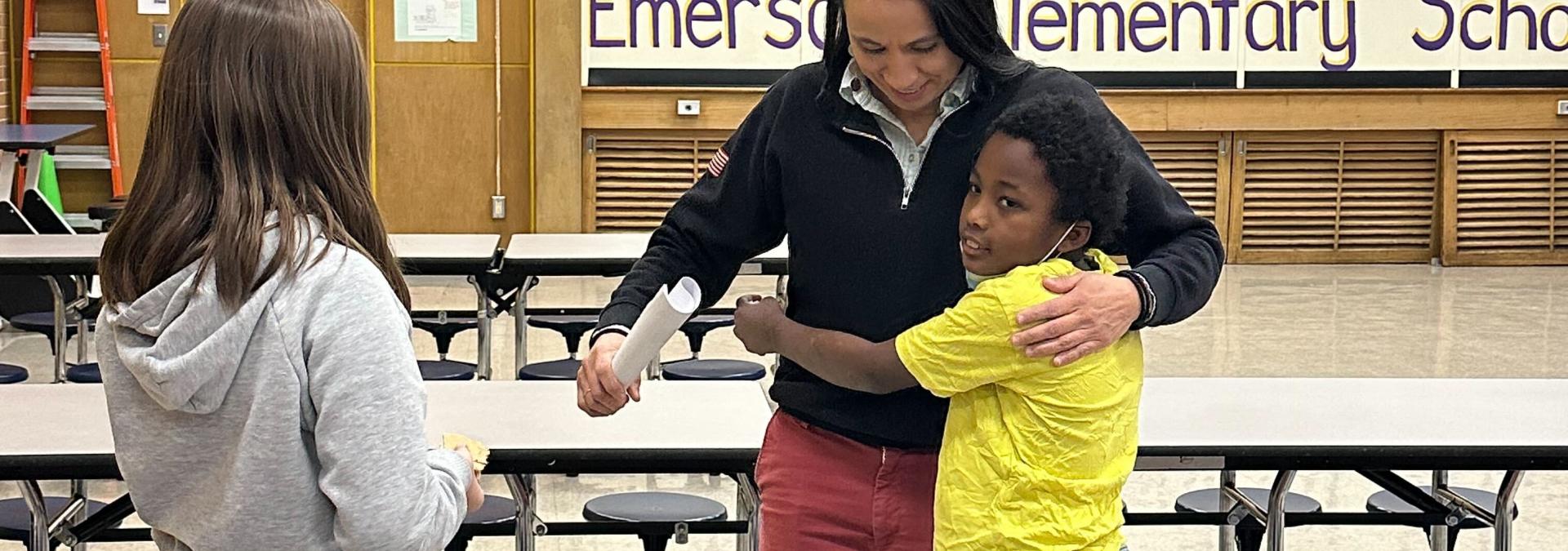
KANSAS CITY, KS – Today, Representative Sharice Davids visited Emerson Elementary School’s afterschool program to meet with students and staff and highlight the importance of affordable, accessible afterschool care for Kansas families. During the visit, Davids discussed her newly introduced bipartisan legislation to expand access to afterschool programs by reducing cost and logistical barriers that prevent many working parents from enrolling their children.
“Afterschool programs give kids a safe place to learn and grow while giving parents peace of mind that their children are supported,” said Davids. “But for too many Kansas families, cost, transportation, and limited availability put these programs out of reach. My bipartisan bill is about using common-sense partnerships to help communities expand available slots, lower program costs, and make afterschool care work better for parents — so moms and dads can stay at work knowing their children are safe and thriving.”
WATCH: Davids speaks on her new bipartisan bill while visiting an afterschool program
“Children throughout the Lehigh Valley and the Poconos can benefit from the after-school programs available in our community, but too many struggle to access them,” said Congressman Ryan Mackenzie (R-PA-07). “That’s why the Afterschool ACCESS Act reforms the tax code to incentivize more public-private partnerships — creating more opportunities for Pennsylvania kids. By freeing up space and transportation for temporary use by providers, this legislation provides the flexibility and versatility that children and families need.”
The Afterschool Access Through Charitable Contributions for Enrichment and Student Support (ACCESS) Act incentivizes public-private partnerships by allowing charitable tax deductions for the part-time use of private property and transportation to support afterschool programs. By unlocking access to physical space, safe transportation, and other essential resources, the bill helps communities overcome the biggest barriers facing afterschool providers — without increasing costs for families.
At Emerson Elementary School, Davids toured the afterschool program, spoke with educators and staff, and met with students participating in enrichment activities. The visit highlighted how afterschool programs support academic success, provide safe and structured environments, and help working families balance their schedules.
According to a recent Afterschool Alliance report, 75 percent of Kansas children whose parents want afterschool care are unable to access it. Cost, lack of transportation, and limited availability remain the most common obstacles. Nationwide, parents report that afterschool programs improve workplace productivity and provide peace of mind, while giving children opportunities to build critical academic and life skills.
Supporter Quotes:
“After-school programming in USD 500 plays a vital role in supporting families by providing a safe, supportive environment for students,” said Mechelle Wortham, Coordinator, KidZone program at Emmerson Elementary. “These programs help build strong partnerships between schools, families, and the broader community, while exposing students to activities they might not otherwise experience—such as partnerships with Scouting programs, martial arts, the YMCA, 4-H, and more.”
“The Kansas Enrichment Network is grateful to raise awareness around the critical role afterschool programs play across the state,” said Michael Lemon, Director, Kansas Enrichment Network. “Out-of-school time opportunities such as KidZone at Emerson Elementary connect communities, support working families, and expand learning and growth beyond school hours. To sustain programs and ensure affordable access to quality afterschool opportunities for Kansans, it is vital to align the needs of today’s youth with local, statewide, and national support.”
“To support positive youth development and the stability of working families, we must address the barriers keeping millions of children out of quality out-of-school time programs,” said John Wilson, President, Kansas Action for Children. “The Afterschool ACCESS Act provides a common-sense, bipartisan solution by incentivizing businesses to contribute the spaces and transportation necessary to maintain and expand programs. This legislation is a vital investment in our children’s future and the continued growth of our communities.”
“We appreciate the leadership from Representative Sharice Davids on this issue,” said Paul Bean, Executive Director, Franklin County Development Council. “Funding is the critical barrier for many families, especially in rural communities such as Franklin County. Affordability is the key issue among families with young children. Food prices have increased substantially, so it limits family budgets to cover afterschool cost. Representative Davids understands this affordability issue, and we appreciate her efforts to help our young families with this important service.”
“Students in afterschool programs make impressive gains in grades, school attendance, behavior, and more — but too many of our children and youth are missing out,” said Jodi Grant, Executive Director, Afterschool Alliance. “The parents of 29.6 million children want afterschool programs for their children, but just 7 million kids are currently enrolled. The bipartisan Afterschool ACCESS Act would help increase access to afterschool programs by incentivizing public-private partnerships that can remove barriers to participation like transportation and support new programs at new sites.”
“The lack of affordable child care is a significant small business issue,” said John Arensmeyer, Founder and CEO, Small Business Majority. “Small Business Majority's research has found that when small businesses cannot access child care, it has a number of major consequences, including forcing business owners to take time away from work, hire additional help, and even shut down their business in some cases. We are glad to see lawmakers working to address this problem, and we hope this is just the beginning of policy changes that will help address America's child care affordability crisis.”