PASSED: U.S. Rep. Sharice Davids’ (D-KS-03) Bipartisan Bill to Strengthen Aviation Safety Passes U.S. House
Today, the U.S. House passed Representative Sharice Davids’ ALERT Act, bipartisan legislation she introduced to modernize aviation safety systems, strengthen air traffic controller training, and reduce the risk of future tragedies. The bill, written in response to the tragic plane collision at DCA that took 67 lives, is supported by the National Transportation Safety Board (NTSB), which investigates aviation accidents and issues safety recommendations to prevent future incidents.
“The tragic loss of 67 lives, including Kansans on Flight 5342, is something our state and our country will carry with us forever, and it demands action,” said Davids. “I helped lead the ALERT Act to take bipartisan steps to strengthen aviation safety by modernizing technology, improving air traffic controller training, and addressing communication gaps so we can better protect passengers and crew. Kansans expect accountability and results, and this legislation reflects the work I’ve done with the victims’ families, safety experts, and federal agencies. Now, we need to finish the job with a final, bipartisan bill that ensures safety measures are implemented without delay.”
WATCH: Davids speaks on the U.S. House Floor about the impact of her ALERT Act
On January 29, 2025, Flight 5342 departed Wichita, KS (ICT), bound for Ronald Reagan Washington National Airport (DCA). As the flight approached its destination, it collided midair with a military training helicopter, tragically killing the two pilots, two flight attendants, and 60 passengers on the airplane, along with all three crew members aboard the helicopter.
The ALERT Act, split between civilian air travel and military aircraft safety, is informed by recommendations from the NTSB and addresses concerns about airspace congestion, communication failures, outdated collision-avoidance systems, and coordination between civilian and military aircraft.
Specifically, the ALERT Act would:
- Upgrade Aircraft Collision Warning Systems
- Direct the Federal Aviation Administration (FAA) to evaluate and implement improvements to advanced collision-avoidance technology on commercial aircraft.
- Establish a timeline for deploying updated systems that provide earlier and clearer warnings to pilots.
- Strengthen Air Traffic Controller Training
- Create expert working groups to modernize controller training standards.
- Improve risk assessment tools to help controllers identify hazards in real time.
- Increase transparency if safety recommendations are not adopted.
- Improve Airspace Communication
- Study technology that detects “blocked transmissions,” which occur when radio messages overlap and critical information is lost.
- Provide Congress with cost and implementation recommendations.
- Review Airspace Congestion and Airport Capacity
- Require the FAA to assess safe arrival and departure rates at congested airports.
- Review aircraft spacing requirements in complex airspace environments.
- Enhance Military Aviation Safety
- Require closer coordination between the Department of Defense and the FAA on collision-avoidance systems.
- Strengthen helicopter safety management systems, particularly in shared civilian-military airspace.
- And more
Davids also previously voted to support the Rotorcraft Operations Transparency and Oversight Reform (ROTOR) Act – a bipartisan bill aimed at improving aviation safety standards. Although it failed to pass the U.S. House, it is supported by the victims’ families and safety professionals.
Following the tragic collision, Davids has taken several additional steps to improve aviation safety and honor the lives lost:
- Met with the victims’ families in Wichita and pledged to be a voice for transparency and reform in the investigation.
- Pressed FAA and NTSB experts in a U.S. Transportation and Infrastructure Committee hearing on air traffic controller shortages and safety protocols.
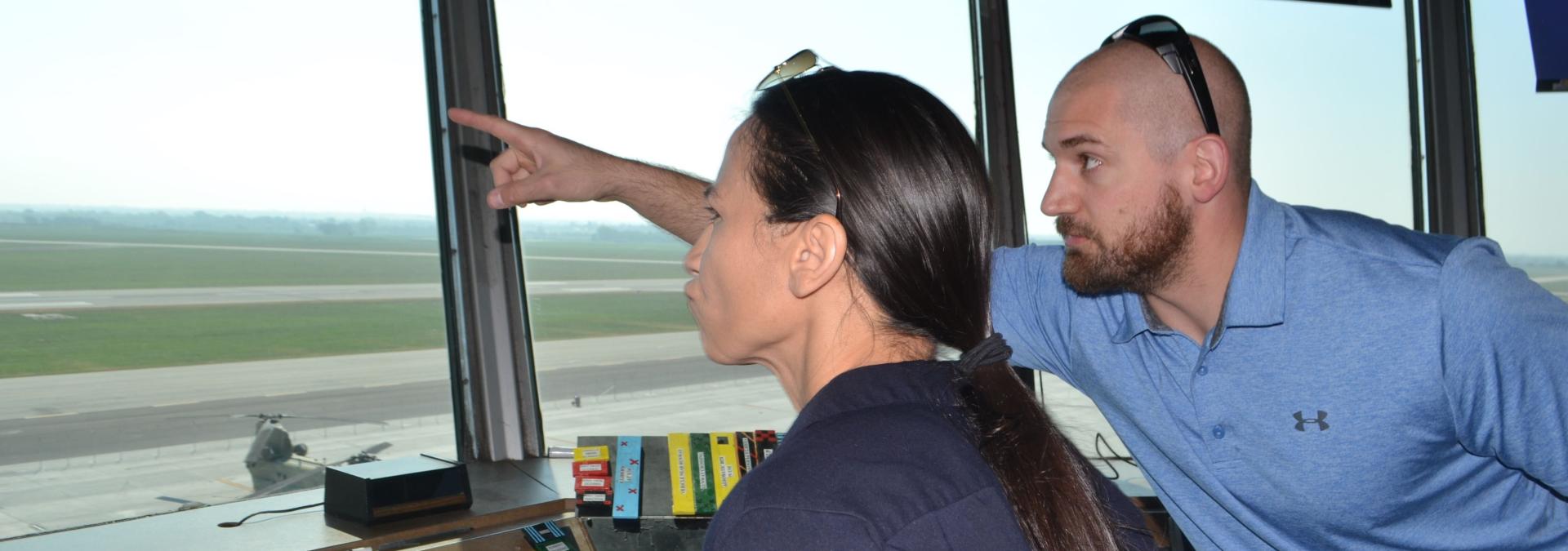
- Toured the Olathe Air Traffic Control Center to highlight critical staffing needs and renew her call for increased investments in aviation safety infrastructure.
- Responded to initial NTSB recommendations with a commitment to act on any legislative fixes needed to keep passengers and crew safe.
- Pledged to act on recommendations from an initial NTSB investigative hearing on the tragic midair collision.
- Honored the one-year anniversary by submitting a statement into the Congressional Record pledging continued action to prevent future tragedies.
Davids serves on the U.S. House Transportation and Infrastructure Committee and has long championed bipartisan efforts to support innovation and strengthen aviation safety standards, including by helping pass into law a bipartisan FAA reauthorization.