Reps. Davids, Stansbury, Stanton Demand Tribal Rights Be Respected After Proposed Hydropower Rule Sparks Opposition from Tribes
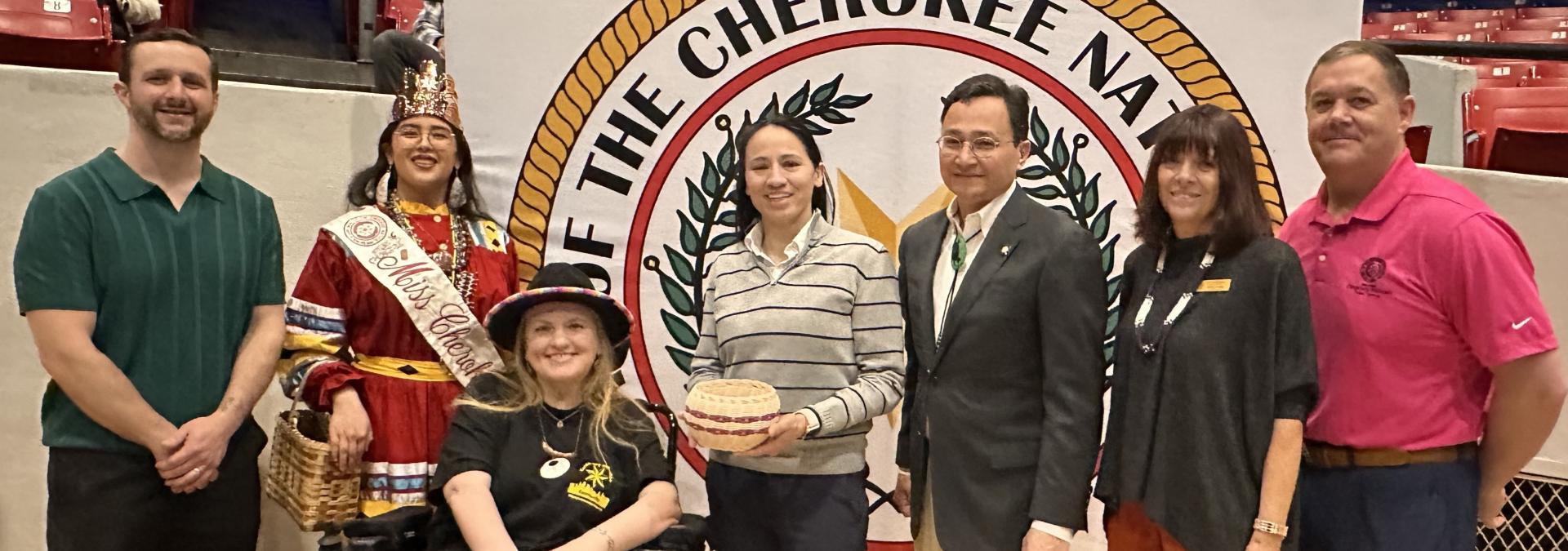
Recently, Representatives Sharice Davids (KS-03), Melanie Stansbury (NM-01), and Greg Stanton (AZ-04) called on the Trump Administration to respect Tribal sovereignty and long‑standing government‑to‑government relationships when making decisions about hydropower projects.
“There is no question that hydropower should continue to play an important role in our nation’s energy security,” wrotethe Members. “But we respectfully ask that you strongly consider the comments submitted in opposition by many Tribal governments, Tribal organizations, and organizations that serve Tribal Nations and reject this policy proposal.”
Right now, the Federal Energy Regulatory Commission (FERC) generally will not issue preliminary permits for hydropower projects on Tribal lands if the local Tribe objects, a policy intended to encourage early consultation and respect Tribal governance. On October 23, U.S. Department of Energy (DOE) Secretary Chris Wright directed FERC to start a rulemaking process that would reverse this policy and allow preliminary permits even when a Tribe opposes them.
In their letter, the Members asked DOE and FERC to:
- Uphold Tribal sovereignty and the government‑to‑government relationship with Tribal Nations.
- Base permitting decisions on trust and treaty obligations the United States owes to Tribes.
- Require meaningful Tribal consultation before issuing or changing policies.
- Retain the practice of requiring Tribal concurrence before permitting moves forward.
Hydropower projects can affect Tribal lands, waters, cultural sites, and resources. Preliminary permits give companies years to study a site before potentially building a long‑term facility — but without Tribal consent, these studies and projects can disrupt communities and sacred places. Respecting Tribal sovereignty ensures that Tribal Nations have a voice in developments on their own lands.
Many Tribal groups have publicly opposed the DOE proposal. These Tribal governments and organizations argue that reversing the current policy disrespects Tribal sovereignty and could allow developers to pursue hydropower projects without meaningful Tribal consent.
"Federal permitting decisions are not procedural when Tribal sovereignty is at stake,” said Dr. Crystal Miller, Head of Policy and Government Relations, Alliance for Tribal Clean Energy. “They are a test of whether the United States will honor its trust and treaty obligations and recognize Tribal Nations as sovereign governments, not as third-party stakeholders."
"The Hopi Tribe strongly supports the letter led by members of Congress defending Tribal sovereignty," said Lamar Keevama, Chairman, Hopi Tribe. "The Commission’s 2024 precedent rightly recognized that development on Tribal lands cannot move forward without the consent of the sovereign Tribal government. Upholding this principle is not only a matter of law, but of respect for our trust relationship and the protection of our lands, waters, and cultural resources. We commend Congress for standing with Tribal Nations to ensure that our voices remain central in decisions that affect our homelands."
“The National Association of Tribal Historic Preservation Officers is grateful to these Members of Congress for their leadership in defending Tribal sovereignty and reaffirming the right of Tribal Nations to determine what is appropriate for their lands, cultural resources, and people," said Ira L. Matt (Confederated Salish and Kootenai Tribes), Executive Director, Indigenous Diplomacy and Federal Relations, National Association of Tribal Historic Preservation Officers. "As FERC-permitted projects increasingly affect entire cultural landscapes, this leadership is essential to ensuring federal permitting respects trust and treaty obligations and protects living cultures, ceremonial landscapes, and places that carry ongoing responsibility for Tribal citizens.”
“Tribes are not third parties to federal energy decisions," said Chéri Smith (Mi'kmaq Descendant), President & CEO, Alliance for Tribal Clean Energy. "They are sovereign governments with inherent authority over their lands, waters, and futures. Treating tribal consultation as optional or dismissible undermines federal trust and treaty responsibility and violates the government-to-government relationship enshrined in law. Congress must act now to reaffirm tribal sovereignty and ensure tribes retain meaningful authority and early engagement in all federal energy permitting decisions."
“American Rivers strongly supports our Tribal colleagues in defending their sovereign right to decide what happens on their lands and waters,” said Leda Huta, Vice President, Government Relations of American Rivers. “We thank the House members who are standing up for sound policy that respects Tribal sovereignty, honors the federal trust responsibility, and ensures that hydropower development proceeds efficiently and responsibly. Respecting landowner rights is not a barrier to clean energy—it is a commonsense approach that promotes collaboration, avoids conflict, and directs public resources toward projects that can actually move forward.”
“Not only is this Nation founded upon a tribal model of governance, but within this Nation’s Constitution, it is articulated and recognized that only Congress has the power to negotiate with Tribes," said Jill Sherman Warne, enrolled member of the Hoopa Tribe, Retired Tribal Official, and Executive Director of the Native American Environmental Protection Coalition for 31 Tribes. "To pass over and treat a Tribe as a public entity or third party is an abomination of the past 200 years of legal actions and authorities made by the Supreme Court, as well as within Federal law and codified in regulations and policies. Federal Energy decisions must include meaningful dialogue, trackable engagement, and actions with Tribes for the Federal Government to meet its fiduciary responsibility through its agencies. Federal Agencies are required by law to uphold fiduciary responsibilities. Tribal lands today are finite! Federal actions can be disastrous without careful consultation, consideration, and engagement of elected tribal leaders of federally recognized tribes."
The Members requested a written response by December 18 explaining how the agencies plan to meet their obligations.
Read Davids’ full letter here or below:
Dear Chairwoman Swett and Secretary Wright,
We write to you concerning the Department of Energy’s (DOE) directive to the Federal Energy Regulatory Commission (FERC) on October 23, 2025, regarding preliminary permits for hydropower projects, and FERC’s subsequent Notice Inviting Comments on DOE’s proposed Notice of Proposed Rulemaking (proposed NOPR). Any final actions by FERC must reflect statutory requirements, trust and treaty obligations, and the unique government-to-government relationship between the United States and Tribal Nations–all upheld by Congress, the Supreme Court, and agencies’ own regulations.
As the proposed NOPR notes, FERC may issue preliminary permits for hydropower projects it maintains jurisdiction over in order to, “secure priority of application for a license… under Part I of the Federal Power Act (FPA) while a permittee obtains the data and performs the acts required to determine the feasibility of the project and to support an application for a license.” While the FPA does not require project applicants to obtain the support of third parties before receiving a preliminary permit, FERC in 2024 formally established a policy to not issue said permits for projects on Tribal lands if the relevant Tribe(s) are opposed; this is similar to policies for projects opposed by federal land managers or federal agencies. The proposed NOPR reverses this policy, stating the FPA, “did not authorize or empower third parties to deny preliminary permits.”
We recognize that the FPA grants FERC ultimate authority to issue preliminary permits for hydropower projects, and we also value the importance hydropower brings to a sustainable and secure electric grid. However, FERC nor DOE appear to have considered Tribes’ authority over their lands that is central to the federal government’s trusty and treaty obligations. FERC and DOE must recognize that Tribes should not be considered typical third parties. They are sovereign governments with a unique relationship to the United States; federal agencies must be careful not to limit Tribal self-determination and erode these government-to-government relationships.
The proposed NOPR includes no consideration of Tribal sovereignty, and–as evidenced by the many Tribal comments submitted during the recent comment period–FERC has not engaged in robust consultations with Tribes about this policy proposal.
Not only does reversing this policy ignore Tribal sovereignty, but it will also hinder America’s energy security too. By rejecting preliminary permits opposed by relevant Tribes, FERC incentivizes project sponsors to consult with Tribes early in the process, developing stronger applications supported by local Native communities. This policy also helps prevent applicants from wasting time (both the project sponsor’s and FERC staff’s) for projects that may ultimately be litigated and/or denied.
There is no question that hydropower should continue to play an important role in our nation’s energy security. But we respectfully ask that you strongly consider the comments submitted in opposition by many Tribal governments, Tribal organizations, and organizations that serve Tribal Nations and reject this policy proposal. FERC permitting decisions should instead be based upon the United States’ trust and treaty obligations, include proactive Tribal consultation, recognize Tribal sovereignty over Tribal lands as a decisive factor, and maintain a framework that relies on Tribal concurrence.
Should you choose to move forward with this reversal, we ask that you respond to us no later than December 18, 2025, detailing how FERC and DOE plan to uphold the federal government’s trust and treaty obligations and prioritize government-to-government consultations with affected Tribes.
Sincerely,